
Planet Passport
A planet with its own gravity, size and moons, and a passport that explains every choice.
AI learning for children · Ages 9 to 11
Children learn maths and science by building with AI: prompting step by step, predicting, testing and deciding. Six one-hour sessions, one build that grows, and a finished product to share.
An example unit
Run it as a half-term block or as six weekly one-hour sessions, for around 15 children. Each child keeps the build they chose, and each session adds one prompting skill.
Book a 20-minute callThe four builds
Each child picks a build that interests them, and the whole class learns the same skill at the same time. In every build, the AI gets something wrong on purpose, so children learn to catch it.

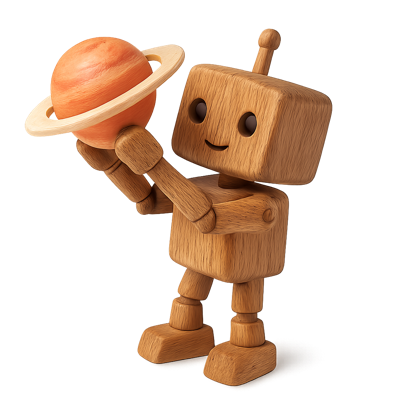
Space
Gravity and forces, halving and doubling. Children finish with a Planet Passport for the planet they built.
The AI's mistake“As high as possible” sets gravity to zero, so the astronaut floats away.

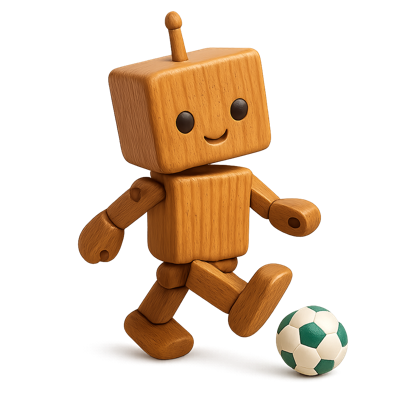
Sport
Forces and angles. Children finish with a Free-Kick Challenge that friends can try.
The AI's mistakeIt reads “high” as a 70° kick, and the ball lands short of the goal.

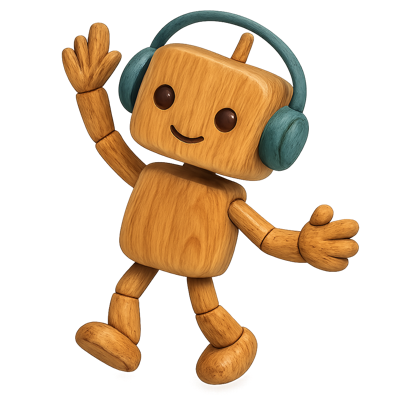
Music
Sound and pitch, fractions and beats per minute. Children finish with a named track of their own.
The AI's mistake“Make the melody higher” comes out louder, not higher in pitch.

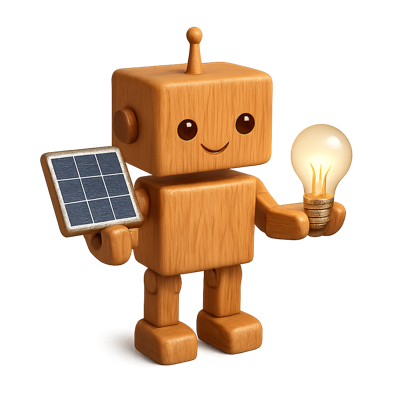
The planet
Energy, percentages and line graphs. Children finish with a Town Energy Plan that keeps the lights on.
The AI's mistake“Clean energy” means solar only, so the town loses power at night.
Safety
There is no open AI model, no chat and no account to create. The AI Lab runs offline on the device, with an instructor in the room for every lesson.

An example in progress
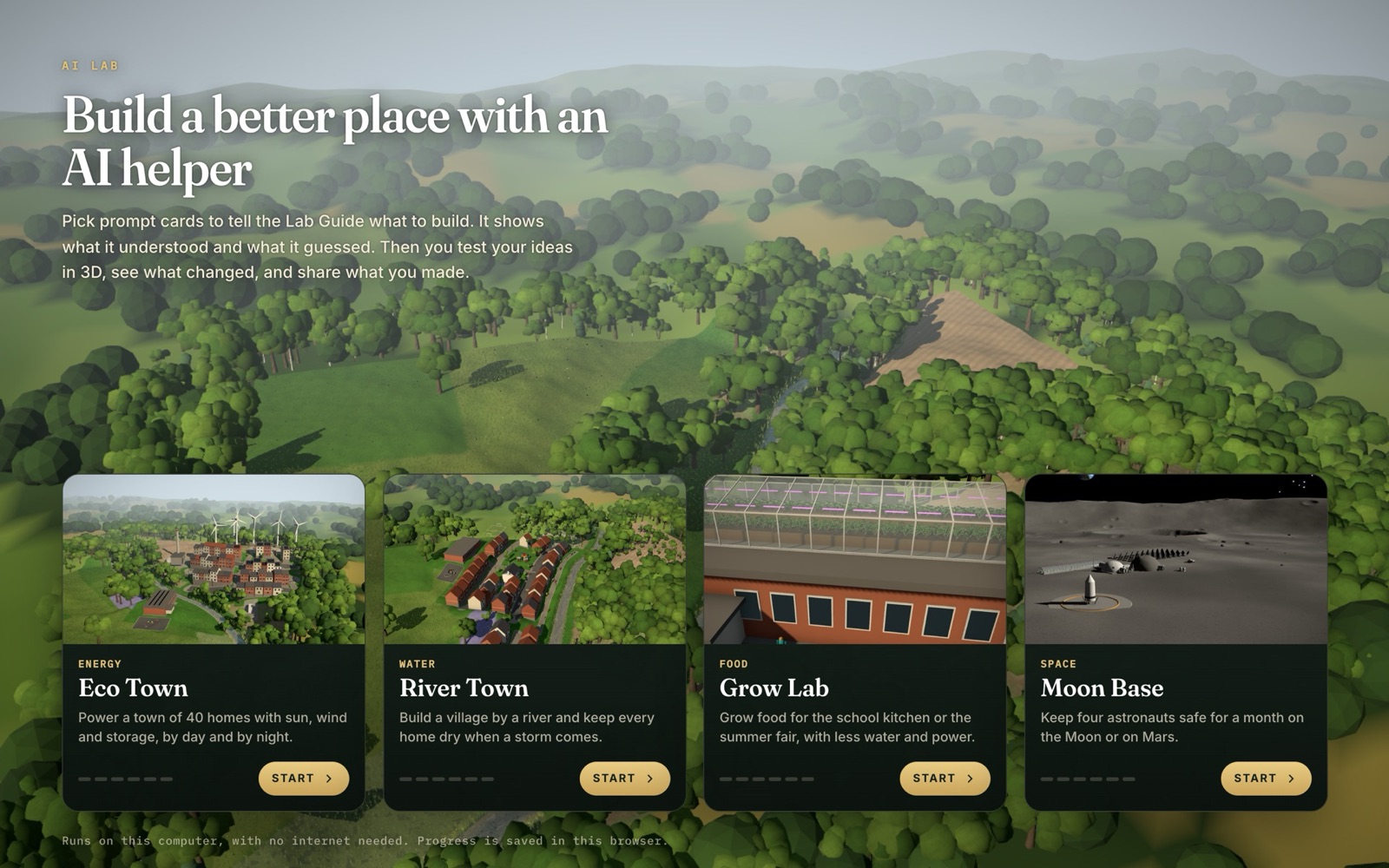
Children pick prompt cards to tell the Lab Guide what to build. It shows what it understood and what it guessed. Then they test their ideas in 3D, see what changed and share what they made.
In development, and built to be changed with you.

River Town · Stage 2
More tarmac means more rain runs straight into the river. The child spots the guess, then tries another card.
Session 6
Each child finishes their product and presents it to the class. They explain what they asked for, what the AI guessed and how they made each decision, so the instructor hears what every child understood.

A planet with its own gravity, size and moons, and a passport that explains every choice.
Which angle goes furthest at 90% power?
A challenge friends can try, built from a fair test of three angles and the evidence behind the best one.
A plan that keeps a town's lights on all day and night, with the line graph to prove it.
The learning model
Children repeat the middle four, each time with a new prompt. Tap any step to see who does what.
Children repeat steps 2 to 5 with a new version of the prompt
Five-part trainingTraining
The training covers how to teach each lesson as well as how to use the software. A non-specialist instructor must be able to run it.
Why
Instructors learn why we teach AI this way.
As learners
Instructors do the activities as learners.
Practice
Instructors practise teaching each activity.
What to do when
A child gets stuck, the AI gives an unexpected answer or the network is slow.
A full lesson
Instructors run a complete lesson from start to finish.
Every session plan gives instructors
Ticks are in the session plans today. The last two we design together.
Training happens on an instructor hub for adults only.
Pilot
We run a small, controlled pilot in real schools, and only expand once it works. These are the questions it answers. We agree the targets with you.
Do children want to keep building and testing? Can they explain what the AI did?
Can instructors deliver the lessons confidently and within the time?
Does it work on real school devices and networks, and meet school expectations?
Can your team support the lessons over and over again?
Working together
Your approach to teaching will shape the product, and we will do the building. After launch we keep going round the same eight stages with you.
Stage 1
20-minute callsListen
We listen to the people who teach, before we decide anything.
Stage 2
One workshopCo-design
We turn their ideas into activities.
Stage 3
A fixed periodBuild
We build those activities into a platform.
Stage 4
Five partsTrain
We train the people who teach them.
Stage 5
A few classesPilot
We test the lessons with real children.
Stage 6
Every sessionLearn
We learn from every class that uses it.
Stage 7
Every monthImprove
We fix what does not work and keep improving.
Stage 8
Evidence firstScale
We scale it up, then start listening again.
We decide together at five points
At each of these gates, we agree the next step together.
Start with a callThe partnership
More than software: the course, the platform, the training and the support to run it well.

FAQ
No. A non-specialist instructor must be able to run it. Every session plan includes timing, instructor prompts and common problems, and training ends with each instructor running a complete lesson.
Yes. There is no open AI model and no chat. The example AI runs offline on the device, so nothing needs to reach an outside service.
There is no account to create, and what children make stays on the device. A shared build travels inside its link, so no server is needed.
No. It's maths and science, learned by building with AI. Children practise saying exactly what they mean, predicting, testing fairly and deciding from evidence.
Run it as a half-term block or as six weekly one-hour sessions, for around 15 children. Each child keeps the build they chose for all six hours.
Laptops with a current Chrome, Edge, Safari or Firefox. A simpler 3D mode helps older machines, and every number still shows without 3D.
No. The structure is an example to shape together. We start by listening, then co-design and pilot it with you before anything scales.
We agree pricing and terms with each partner once we understand what you need. Book a call and we'll talk it through.
Where it runs
The same builds, the same safety setup and a trained instructor with every group.
Six one-hour lessons in the timetable, or a half-term block for a class.
Weekly clubs where children keep the same build across six sessions.
Education partners who deliver across many schools and clubs.
Deployment. We help schools set it up on their own devices and networks, and we work with your IT team, never around it.
Book a 20-minute callNext steps
It starts with 20-minute conversations with the people who know your organisation best.
You choose from curriculum, delivery, schools and senior leaders.
We share the questions in advance.
It lasts 90 to 120 minutes, in person, after the interviews.
Then, at Gate 1, we decide together whether we understand the educational direction.